Monday, 24 August 2015

Merantau


Merantau is basically an Indonesian version of Ong-Bak, but worse. It’s slower paced and has far fewer action sequences, which are shorter and less interesting. It has a grim focus and just lacks the sense of fun of that movie. It’s the first collaboration between Welsh director Gareth Evans and Indonesian martial artist Iko Uwais, the duo who would later go on to give us absolutely amazing action classics ‘The Raid’ and ‘The Raid 2: Berandal’. In that respect, Merantau is just the rough, early groundwork for a director, filmmakers and actors who had never made an action movie before – they built on and improved on everything here to make The Raid as good as it is. Of course, that means that Merantau itself isn’t as good in comparison – the groundwork in terms of cinematography, editing, camerawork and choreography can be seen here, but it’s not to par with what would come later.


Young martial artist Yuda leaves his small Sumatran village to go on a journey into Jakarta as a right-of-passage (or ‘merantau’). He arrives in the bustling city with no money and no job prospects, and quickly finds himself homeless. Within hours of making it into Jakarta, Yuda ends up saving teenaged Astri and her little brother Ajit from human traffickers, gaining the ire of local sex trade mob boss Ratger. Yuda then makes it his mission to protect them from Ratger’s goons.

It really is a lot like Ong-Bak actually, especially in terms of plot and even specific action beats. In fact I’d just say that the movie is really just a more serious, inferior Indonesian version of Ong-Bak. The similarities are astounding; they both involve a young martial artist from the sticks heading into the sleazy big city and finding the dark underbelly. While Ong Bak draped its action and stunts in a pulpy tale about a crime boss stealing Buddha statues, Merantau goes darker, concerning itself with the underground sex trade.  Ong Bak had a similar sort of weird grimness hiding just under the surface (there’s that part where a girl is forced to OD on cocaine and dies), but Merantau goes so much darker. The movie doesn’t pull punches, particularly about the sex trade. The implications of a cotton-tip test are very uncomfortable. It’s a grim and unfair world out there, and Merantau makes sure its characters know this. Yuda has a much rougher time, getting the crap beaten out of him a fair bit, while Astri has a rough time in a different way.


A big part of the problem is the tone and pace. It’s really bleak all things considered, with its blunt focus on the sex trade. It has a very slow pace, with it really taking until the final twenty minutes for the action to really kick in. It focuses a lot on the villains, like the angry, sleazy Ratger and his second in command Luc, who have a really weird relationship (best friends who also happen to kidnap/rape girls for a living?), but these scenes don’t really do much to make them interesting, nor do they add much to the already thin plot. Yayan Ruhian, who played Mad Dog and Prakoso in The Raid and The Raid 2 respectively (and choreographed both films), appears here as Eric, a man who, like Yuda, had headed into Jakarta for his right-of-passage only to become a criminal. He’s meant to be the rough reflection of Yuda, something the movie only barely looks at or considers – it never questions or delves into Yuda’s determination to do the right thing.

The fight scenes are, for the most part, brief and a bit plain. It takes until the end for the film to really hit its stride with fast, brutal action choreography, but before then it’s nothing special. There are highlights, like a claustrophobic fight in an elevator and the finale at a shipping yard, but otherwise they’re fairly plain and short. The martial art on display this time is Pencak Silat, an Indonesian martial art, and it’s interesting to see in action, with a seemingly more free-form movement than other martial arts. White guys don’t really make for particularly interesting final bosses in Asian action flicks. They often don’t have the moves or the presence to be entertaining. They might be taller and more muscular, but in combat they’re just less interesting, often lacking the limber athleticism and flexibility of their Asian opponents. Ratger is no different – apart from being a head taller than Iko Uwais he’s just a white guy throwing punches and kicks, same with his second in command Luc. The final fight is good though, finally getting to that fast, brutal combat seen in The Raid, but it’s too late and too brief.


I actually wonder if I would have liked Merantau better if I hadn’t had seen Ong-Bak and The Raid first. While it is possible, I don’t think my opinion would have changed too much – the pace is fairly slow and the grim subject manner and bleak tone sucks a lot of the fun out of it. It does have a few good action beats, but compared to those other films it’s plain and disappointing. If it is one good thing that Merantau gives us, it’s that it lead to The Raid and The Raid 2 being made, both of which I’d heartily recommend, along with the first Ong-Bak, over Merantau.

Sunday, 23 August 2015

Ong-Bak

Ong-Bak: Muay Thai Warrior is an absolutely awesome Thai action movie which launched the career of Thai action star Tony Jaa and started a trend of Thai martial arts movies, giving us films like The Protector and Bangkok Knockout. Ong-Bak remains the absolute best of the bunch; it’s seriously a really fun, exciting movie, and gets my full approval (whatever that’s worth), sporting great action and amazing stunts. It’s a great movie that spawned two sequels of vastly varying quality. I’ll be covering all three of them, starting with the first, and best.

After artefact smugglers steal the head of an ancient Buddha statue, the titular Ong-Bak, from a poor rural village in Thailand, young Muay Thai fighter Ting (Tony Jaa) volunteers to head to Bangkok to retrieve it. Ting, unsure of where to begin his search and naïve to the harshness of city life, meets up with his cousin Hum Lae, who has become a hustler and con artist with his partner Muay. While initially attempting to con his ‘country bumpkin’ cousin, Humlae agrees to help him find the head after seeing how amazing a fighter he is (and planning to exploit him in underground fights).

Despite the simplicity of the main premise (it’s seriously ‘go find the head’) a lot of stuff goes on, with sub-plots involving gambling, underground fight clubs and drug abuse. While most characters are the same from the beginning to the end (Ting’s ‘development’ just involves punching more guys), Hum Lae actually does get character development and something of an arc, which actually works pretty well (especially considering he’s mostly the comic relief). It’s all flavouring for the action scenes, with the plot more of an action delivery system.


Like the best action movies, each scene is a showcase for the skills and athleticism of its star, and Tony Jaa does not disappoint. While the man is incapable of emoting or conveying any sort of drama and lacks a knack for comedy, he does know how to deliver a flying knee to the head. He’s athletic, showing off impressive flips and kicks like nothing else. It’s a showcase for Muay Thai, Thailand kickboxing that utilises knees and elbows for violent effect, and the film shows it off in big brutal style (getting an elbow to the head seems like the most painful thing ever).

The film begins in energetic style with a competition where a few dozen men attempt to climb a massive tree and retrieve a flag from the top while fighting each other, and it only gets better from there. The film has it all from energetic chase scenes, brutal fist fights and even a rickshaw taxi chase. The variety is the real joy, with every action scene being different and inventive. The absolute best part of the film has to be a foot chase where Ting jumps, flips and weaves through various obstacles at high speed (often captured in several different camera angles). It’s some seriously impressive stuff (like him sliding while doing the splits underneath a car).
 
Ong-Bak is, all up, really great. It has an awesome energy, great stunts (all done for real!) and exciting fights, and is easily one of the best action flicks of its time. It’s essentially what opened the gates for Malaysian action films, paving the way for others like it, though Ong-Bak remains the best for my money.

If you can, find the original Thai Uncut version since its easily the best version of the movie. The International Cut removes subplots, shortens fight scenes, cuts the more violent parts and, the absolute worst offense, changes all the music which completely ruins the action scenes. The Australian Eastern Eye special edition has both versions. 


Ong-Bak 2: The Beginning is a strange movie for a number of reasons. For one thing, Tony Jaa himself steps behind the camera. Even stranger is what Ong Bak 2 is – it’s a prequel, but set several hundred years before its predecessor and not dealing even remotely with any of the characters, places or things from the first film. It’s a much different film from its predecessor, for good and bad, but, while fun, ultimately the film isn’t anywhere near as good as the first, though it is still an entertaining action film.

Set in feudal 15th century Siam, the story concerns itself with Tien (Tony Jaa), a young boy who, after his noble parents are killed by the power-hungry Lord Rajasena, becomes a street urchin. He’s quickly welcomed into the Garuda Wing Cliff, a mercenary group of assassins run by the respected and renowned Chernang who adopts him and puts him through various tests and trials to toughen him up and turn him into a master fighter, with the prodigious Tien becoming one of the greatest fighters of them all. His training complete, Tien turns his attentions towards revenge on Lord Rajasena, who has grown even more powerful. 

The majority of the film is about Tien learning to fight and becoming a mercenary before it suddenly rushes to its massive climax. As a result there isn’t much to the story beyond the early scenes – Lord Rajasena isn’t much of a presence at all beyond that, and the quest for revenge only figures into a few minutes of the film. The film also ends on an abrupt cliff-hanger sequel hook after a particularly big, bloody and exciting finale where Tien fights and kills a small army of opponents.

There is a lot more blood and gore here, and a bigger emphasis on weapons. Most action scenes involve various types of blades, with heads severed, throats slit and bellies split. Tien uses an insane number of different weapons here, to the point where his training with the mercenaries seems to involve every single type of weapon and martial art ever. It’s a more serious film, and doesn’t have the more light-hearted fun of the first film, but I can’t fault the action. While it doesn’t have the stunts and chase scenes of the first film, the various sword fights and battles are really quite awesome. The variety in weapons and styles is also awesome, showing off stuff we don’t tend to see in most other action films. The switch to a historical setting gives way to more historical-looking sets and costumes, which are all quite nice actually. Traditional clothes and jewellery are impressive, with the film having a unique feel.

All in all, Ong-Bak 2 is an entertaining movie, but it just isn’t as good or as entertaining as its predecessor. The action is great fun and the overall look and production design is all quite great, but the story is almost non-existent, the writing is horrible, the serious tone takes the fun out of most of it and it just lacks the qualities that made the first film so fantastic. Ong-Bak 2 is a very different beast though, and while some of those differences don’t pan out, some do make it stand out somewhat. The ending itself is disappointing as an abrupt sequel-baiting cliff-hanger, which also leads into the final Ong-Bak film.


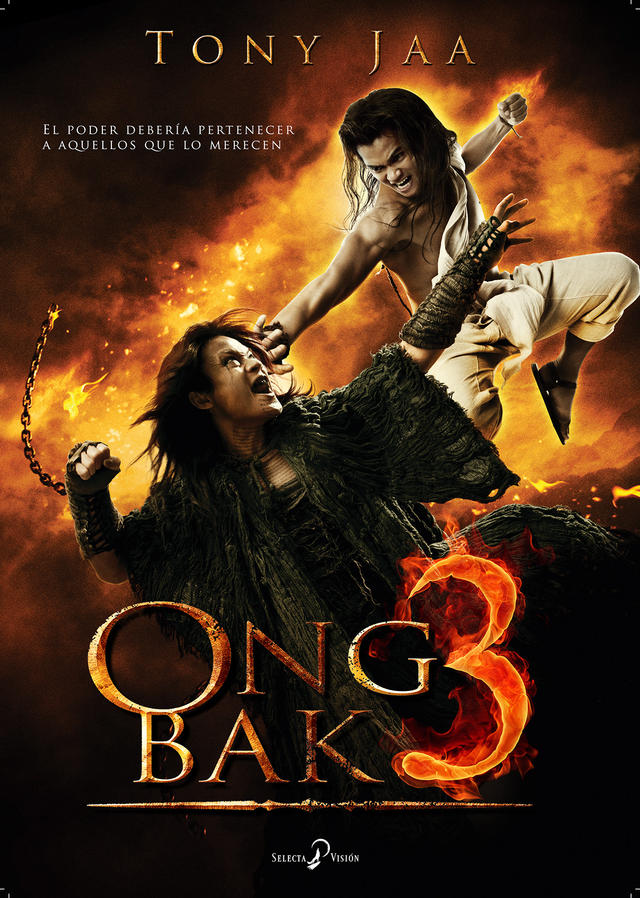
Ong Bak 3 is about Tony Jaa becoming Jesus Christ. I’m not joking. The finale in the trilogy, of which two titles are prequels, Ong Bak 3 is where things fall apart. While the first is fantastic and the second is fun, the third is disappointingly dull and uninteresting. It’s also gets very weird, with writer/director/star Tony Jaa making a film where he dies, is resurrected, becomes enlightened and becomes a messiah by saving the world – though he spends most of the film either incapacitated or meditating.

Taking place immediately at the end of Ong-Bak 2, Tien (Tony Jaa) is captured by the villainous Lord Rajasena and is tortured, crippled and beaten to death. Villagers retrieve his body and take it back to the village. Once there they wrap him in twine and construct a Buddha statue for him (which ends up being the statue from the first film, finally actually tying this two-part ‘prequel’ to the first film). A few days later, he emerges from his wrappings alive but crippled. With the teachings of a Buddhist monk and the love and help of a dancing girl, Tien rehabilitates and becomes enlightened. He also wears white robes and grows a beard and spends his time meditating and philosophising.

The Crow Ghost (a villainous, supernatural character who only appeared in the last five minutes of Ong-Bak 2) kills and usurps Lord Rajasena and takes control, enslaving the villagers and killing those who oppose him. Tien, now enlightened, has to save the day and finally put an end to the Crow Ghost’s evil.


Ong Bak 3 is easily the weakest of the three and is the only one I’d consider bad. It’s slow, there’s less action and the action itself is less interesting than in the preceding two films. It has a bigger focus on philosophy and Buddhism (there’s a twenty minute chunk of the film devoted to it, involving Tien’s resurrection, rehabilitation and enlightenment), which really doesn’t fit with the punching and kicking when it eventually happens. It’s just not as interesting or entertaining and, if you want to get right down to it, becomes downright boring at times.

The sudden switch to full-on supernatural is jarring, considering there really wasn’t much of it in its immediate predecessor. There’s just so much focus on it this time through. Besides the Buddhist philosophy, there’re also curses, black magic and spirituality focusing heavily in the plot. The Crow Ghost is downright supernatural, able to conjure curses, use black magic and he even causes a solar eclipse. By the end Tien is supernatural as well, calling down a lighting strike at will. It’s a disappointing end to the series, and a really weird one. It really is about Tony Jaa becoming a Jesus Christ figure, which is about as weird a direction as you could take an action film.

And that’s the Ong-Bak trilogy. It’s a weird set of films put up against each other, especially since 2 and 3 go so off the rails and get strange. The first film is seriously amazing though, and well worth watching – it still stands up today and I wholeheartedly recommend it. The second film is fun but not on the same level on the first, though it’s more violent and the set and costume designs are quite interesting – it’s a fun watch. The third is the weakest and is just a bad movie – It’s only worth watching if you wanted closure on the second film.  

Wednesday, 19 August 2015

Imprint


Masters of Horror was a short lived horror-based anthology TV series that ran for two seasons in 2005 and 2006. Each episode is, essentially, an hour-long horror film directed by a ‘master of horror’, a loose term that encompassed everything from actual masters of horror (like John Carpenter and Dario Argento), lower budget horror stars (Stuart Gordon and Don Coscarelli), those whose output is more varied (John Landis and Joe Dante), and some random hacks (like series creator Mick Garris). The directors were given a lot of freedom, with fewer restrictions than most, and allowed to craft short horror films of their choosing.

The series was actually pretty decent with some absolute gems in there (John Carpenter and Dario Argento’s episodes prove they still have it) and also some trash, but on the whole the series was a lot of fun with a (mostly) interesting selection of directors showing off their stuff. And perhaps the most interesting one of them all would be Takashi Miike’s inclusion in the list. Already a controversial director, one has to imagine what exactly they thought they’d be getting by tagging him for an episode.

Miike’s episode, titled ‘Imprint’, was apparently deemed too disturbing by producer Mick Garris and the TV network. They requested edits to tone it down, Miike obliged but it was still considered too much, with concerns over the disturbing, graphic content and as such they never aired it – to this day it is apparently banned and has not been shown on television. They even released it separately from the Masters of Horror DVD box set. Funnily enough, Miike didn’t think he had pushed any boundaries, thinking everything he was doing was perfectly fine and acceptable.

So the question now is, controversial or not, is it any good? Let’s take a look.


Christopher (Billy Drago), an American journalist, had once travelled to Japan and fallen in love with a prostitute named Komomo. He promised to return, buy her freedom and take her back with him to America. Having finally returned to Japan, he’s spent a long time fruitlessly searching for her, finally tracking her down to a brothel on an isolated island. She isn’t there, and those that run the brothel claim that she’d never been there. Dejected, he nonetheless has to stay the night, as the boat only leaves in the morning. Stuck there, he chooses to spend the night with a mysterious disfigured girl for company. Slightly deranged, speaking of ghosts and demons, she claims that Komomo had been on the island, but had died. Distraught and drunk, Christopher asks her to tell him her story, and so she does, telling of her childhood, how she became a prostitute and how Komomo died. Unsatisfied with the story, Christopher demands to know the truth, deducing that she’s lying and leaving things out, and so she tells the story again, this time a much darker, more complete version. Every time she tells the story, the details get darker and more disturbing.

So how disturbing is it? Pretty freaking disturbing. It is legitimately messed up. And it’s not just the violence and torture, nor the themes, but the subject matter and how it’s shown. The subject matter it deals with is grim, and some of the visuals and imagery are horrific and a more than a little distressing (the things floating down the river alone are disturbing). It’s a (short) movie that will make you uncomfortable. This is some truly horrific stuff here and it’s easy to see why it was controversial and why it was banned from being shown on television.

Now for the weakest point - the acting is pretty atrocious. Billy Drago is not a man known for his acting (if you do know him, it’d be for his villain roles and not speaking parts). Here his timing is way off and ridiculous, sometimes instantly reacting to other character’s lines before they’ve had a chance to say them, and other times not reacting at all. Sometimes it’s really difficult to tell what emotions he’s meant to be showing, though I guess ‘drunk and delirious’ would cut it for most of it. The disfigured girl is a little better, though her delivery is a bit too forceful. The rest of the limited cast have a few issues – it’s a Japanese cast in an English-language movie and most obviously don’t speak English, so their delivery is stilted and their pronunciation is off.
 
 
The filmmaking itself is pretty decent. While the budget was obviously low, they make it work with a surprising variety of locales (despite being mostly confined to a single brothel room, flashbacks take us to the Japanese countryside). Costumes and set design is nice, with some typical Miike weirdness (one of the brothel managers is a syphilis-ridden midget with a dead chicken weaved into his hair). The effects, while mostly low budget, are really quite effective and horrific. The violence is bloody and gruesome, while the physical make-up is mostly great. Some of it is a little too fake, and as it reaches its conclusion potentially silly, but it’s still pretty freaky stuff. There’s a horrific torture scene that is painful to watch (somewhat similar to Audition’s torture scene). It doesn’t so much push boundaries as it completely ignores them, with a lot of the themes, subject matter and violence being far beyond what you’d ever expect to see on television.

While largely a visceral experience, it does also play tricks on the viewer – Christopher gets increasingly drunk and angry as time passes, with the things he sees possibly either being hallucinations or hauntings. It’s also vaguely hinted to a sinister background for Christopher, and a grim reason as to why he’s infatuated with Komomo. The themes and ideas are also strange, with every well-meaning character in flashbacks being revealed as horrible and cruel in truth. In fact, it’s hard to tell what is happening with the characters, be it how sane Christopher is or the disfigured girl’s obsession with hell. The ending is really weird and unexplained, and certainly open to interpretation.

Imprint works, is the crux of all this, even despite some of its issues. It is a bit of a strange outlier in Miike’s filmography in terms of filmmaking; it fits with Miike’s warped sensibilities and controversial output, but it also feels like he adapted his free-form style to fit what he thinks American audiences expect from horror film with how it’s shot – not in a bad way, the film works, but it definitely has a different feel to Miike’s Japanese horror works, like Audition and One Missed Call. When compared to the other Master of Horror episodes it sits with the better ones, and is easily the most disturbing of the bunch (which is saying something since some of them are really quite great). I’ve got the DVD copy of it, and it’s interesting to see the interviews and making-of stuff that show Miike in action – the dude just gets on with it and films the thing, an attitude that seems to fit his massive output.


Saturday, 15 August 2015

Ichi the Killer


How the hell do I review Ichi the Killer? It’s a hard movie to really talk about, since the only way I can really think to describe it is as ‘a Takashi Miike film’, and you’ll either know instantly what that means or you’ll have no idea. Well, here goes anyway; it’s a Takashi Miike film, and probably his most iconic, violent and controversial – whenever Miike is mentioned or namechecked Ichi is mentioned as well, often along with Audition. It is a showcase of the style, themes and content of a very prolific director who has made everything from children’s films, videogame adaptations, documentaries, serious dramas and horror films. Ichi, however, is a Yakuza film, a very specific genre Miike has inhabited for decades.

It’s violent, gory, sadistic, depraved, psychotic and darkly funny with a morbid sense of humour. The plot is thin, the characters are weird and the ending is strange, unexplained and open to interpretation. It’s the sort of movie that’s hard to compare to anything, other than Miike’s other movies. There are traces of his earlier films in there, like Dead or Alive or Fudoh: The New Generation, but Ichi is exceptionally out there, focusing on sadists and masochists in a pretty blunt way. The film’s title appears in a puddle of semen after the titular Ichi masturbates while watching a pimp brutally beat and rape a prostitute. That opening, with its rapid editing and frantic music, really sum up what to expect from the film. It’s strange, brutal and uncompromising, and so thoroughly watchable it’s bizarre.


Jijii, a minor member in the Japanese criminal underworld, is instigating conflict between gangsters by manipulating Yakuza families into wiping each other out for his own personal gain. He does this by spreading rumours and misinformation, manipulating and using others while he remains an inconspicuous background presence. Jijii’s trump card is Ichi, a mentally unstable young man who he has conditioned, through hypnosis, false memories and aggressive coaxing, into becoming a psychotic killer – when Jijii needs somebody killed, he sends Ichi to do the job.

Kakihara is a sadomasochistic Yakuza enforcer, notorious for the tortures he inflicts and so whacked out that even his superiors in the Yakuza are afraid of him. When his boss goes missing (slaughtered by Ichi on Jijii’s orders), Kakihara begins a tortuous rampage to find him, the search becoming a hunt to find Ichi. Jijii continues to orchestrate things from behind the scenes, ultimately pitting Kakihara and Ichi against each other.

It’s a pretty thin story all things considered, with more of a focus on the strange characters and their quirks. It’s used as a vehicle for all the violent, wacky weirdness. The movie absolutely never takes itself seriously, which is why it works – the weird sense of humour that inhabits every scene largely defused the more horrific stuff. The strange, violent, cruel scenes are buoyed by the exceptionally dark, silly humour. It remains compellingly watchable, even at times where it seems to be aimless or unpleasant.  

While having a fairly straightforward story, the details and way it’s told and structured are anything but. There are random flashbacks for several characters, delusions, false memories (some which might actually be true) and so many weird, unanswered scenes and plot threads that seem open to interpretation. The exact reasons as to why Jijii is bringing down the Yakuza is never explained or even hinted to, nor is his particular hatred for Kakihara. Most characters have mysterious, hard to decipher motivations A few exceptionally brief scenes or fast edits bring up so many questions about story aspects that have seemingly no importance. It all leads to an exceptionally strange ending that is very much open to interpretation. As are the themes, if there are any – the meaning and importance of violence are certainly looked at and indulged, with characters that need it, loathe it and love it making up the cast.
 

There are no good guys here. Everybody is horrible, violent and cruel and nobody has any redeeming qualities. Even the ones that don’t seem to be horrible reveal themselves to be terrible in some way. Characters are depraved, mentally deranged, psychotic or just plain weird and wacky, running the gamut from junkies, prostitutes, corrupt cops and various Yakuza flunkies.

Kakihara is easily one of my favourite film psychopaths, and is really the heart and demented soul of the film. Heavily scarred, with a Glasgow smile (held together by piercings) and an odd sense of style, Kakihara, put simply, is the most fun character of the lot. He’s also just about the most violent and psychotic character here, in a film full of them, but he’s always enjoying himself and isn’t bogged down in the real-world concerns of others. Kakihara, when it gets right down to it, is just looking for somebody to hurt and even kill him – that’s why he becomes downright eager to meet and fight Ichi, and why the finale gets so strange. He’s played excellently by Tadanobu Asano, a Japanese actor with great comedic and dramatic talents (he was excellent as Genghis Kahn in Mongol).

Ichi is a pitiful and pathetic character, a whimpering, nervous wreck, prone to being bullied and, when he snaps, bursts into tears as he flips out and kills people. Ichi goes into battle wearing a ridiculous BMX armour body suit, his weapons being shoes with retractable blades in the heels. He gets sexually aroused by violence, but is a whimpering mess for the most part, Jijii’s hypnotic suggestions severely messing him up to the point where even Jijii thinks he’s gone too far.

The rest of the fairly robust cast are quirky and strange. Jijii is oddly complex, mostly due to his motivations being unclear, with the finale giving a ridiculous reveal. Kaneko, an ex-cop-turned gangster thug just trying to provide for his son, is the closest there is to a sane, reasonable person (though even he violently snaps at one point). The corrupt police twins Jiro and Saburo are probably my favourite for weirdness – one wants to know if you can pull somebody’s arm off if you yank it really hard (and tests his theory) while the other, in probably the height of weirdness, tracks down a wanted thug by putting on a pair of dog ears, sniffing the crotch of the guy’s favourite prostitute and then following the scent.

The violence is ridiculous, with big gushes of blood, spilled organs and severed limbs being commonplace. The more outlandish violence is even played as jokes, with a lot of the gory tableaus being so ridiculous, over the top and unrealistic as to be funny. Other acts of violence however are brutal, far more realistic and uncomfortable, such as some of the violence directed to women. A rival gangster is tortured, suspended with hooks run through his skin, has needles jammed through his cheeks and is scoured with boiling water. This is almost the least horrific thing to happen in the film, with the more brutal, prolonged and uncomfortable tortures happening to women (nipples + boxcutter is horrible). While a lot of the violence is shown in gruesome detail, in true Miike fashion it’s the sound design that really brutalises; much like the ending of Audition, the sound effects make it even more horrific so that even when we don’t see what is happening we wince because we can hear it.

It’s a well-made film, especially by Miike’s standards (considering the man largely works with little for a budget), full of creativity and style. It’s energetic and outlandish, with a lot of sudden explosions of gory violence amidst strange, inventive scenarios. The music and editing are notable as well, the former being full of strange tunes and weird, almost experimental beats. It’s weird and bizarre, with too many WTF moments to count, and so strangely watchable. It’s one of Miike’s best, and most iconic, movies, and considering the man has directed over ninety films (and looks to have no sign of stopping) that’s a pretty big statement.

Wednesday, 12 August 2015

The Treasure Hunter


The Treasure Hunter is a Taiwanese adventure movie strongly in the vein of the Hollywood adventure flick ‘The Mummy’. And it sucks. Treasure Hunter has an identity crisis. It doesn’t know what it’s about. Or, more specifically, it doesn’t know who it’s about. It tells several different small stories within the same brief narrative, never really bothering to flesh any of them out and constantly shifting focus between its multiple bland characters. At one point the movie seems to forget completely what its own plot is, with the central ‘treasure hunt’ being underwhelming and almost sorting itself out.

So what’s it all about? And who is it all about?  There’s Lan Ting, a woman authoring a book on desert legends whose father was a famous archaeologist. Her book details the legend of a hidden city holding a glorious treasure in the desert and the mysterious guardian clan that protects it. She’s kidnapped by treasure hunters led by the greedy Pork Rib, who wants to use her expertise and knowledge to decipher a map that supposedly leads to the hidden desert treasure city. Hua Dingbang, a famous archaeologist, joins them. His deal is that he led a former expedition to find the hidden city that ended in failure and the deaths of all his friends and now he has survivor’s guilt.

Then there’s Qiaofei, a treasure hunter/tomb raider who lives in a desert outpost and uses kung-fu to resolve disputes and fight the supernatural. Qiaofei was also childhood friends with Lan Ting so they do the whole ‘romance’ thing with the two. He’s hired to protect her/help her find the hidden city. Then there’s the Sandstorm Legion, the guardian clan who protects the desert and the treasure and fight off treasure hunters – they’re having a leadership dispute of sorts. Qiaofei is also involved with them, leading to all sorts of meaningless drama.


The movie sort of uselessly flits between all of this, with the vast majority of it being nothing more than useless flavouring. If anything, the story of Lan Ting, Qiaofei and the treasure is treated as a secondary concern to some of the side plots, most of which bog the film down. Everything to do with the inner-workings of the Sandstorm Legion could have been dropped completely and the film would have been tighter and more trim and organised. It’s baffling that the central part of the adventure, the hidden desert treasure, is largely ignored while character drama is worked out – there’s no real sense of urgency or momentum for a large chunk of the film. It kills the ‘adventure’ of this adventure movie.

Qiaofei is meant to be the Indiana Jones sort of character, and doesn’t quite work it. He’s confident and capable, but not particularly likeable due to his smugness. He’s played by Jay Chou, an odd actor in that his stone-faced acting either lends itself to really good roles (he’s great in Initial D and The Viral Factor) or really bad ones (he was dull as bricks in the Seth Rogen flick Green Hornet). His ‘relationship’ with Lan Ting never works because the two have no chemistry at all. He never seems interested in her. Speaking of Lan Ting, she’s just awful. The actress playing her is just a bad actress, almost pantomiming actions and coming across as whiny. Everybody else is shrug worthy. Pork Rib is the one-dimensional sleazy greedy guy and the Sandstorm Legion’s top brass are boringly righteous desert protectors. Hua Dingbang is melancholic with his disastrous guilt over his failed expedition, with his personal story further conflicting with the fluctuating tone of the film. At times it seems to want to be a fun romp of a desert adventure, but stuff like the Sandstorm Legion and Hua Dingbang take the light hearted fun out of the story, marooning it in tonally bland territory where half the cast seems lost.

The supernatural is in full force here, but the movie doesn’t really seem to react to it. There’s no surprise, shock or suspense there, it’s just treated as if it’s some sort of mundane occurrence. ‘Oh look, ghosts’, seems to be the muted response most characters have. The sense of mystery and wonder is also pretty much non-existent. Qiaofei acts almost bored and entirely unsurprised when a golem made out of sand possesses a suit of armour and attacks him.


The action scenes themselves are decent for what they are and pretty entertaining, but it feels like something is a little off with some of them, be it some shoddy CGI, some poor editing or limp choreography. Qiaofei uses kung-fu to fight the aforementioned soldier made out of sand, a guy with mummy/bandage-related powers and some evil ghost spirits, along with a few bandits and marauding Sandstorm Legionnaires. The special effects are pretty subpar – mummy guy’s bandages look awful, the ghost spirits look silly and the big scenes, like a motorcycle chase through a sandstorm and the fabled treasure city, are just overly fake or dull.

The film feels like it’s stuck in two separate time periods. Everything in the desert feels like its set in the past, with the costume and set designs feeling like it’s meant to be set in the 1930s (there’s your ‘The Mummy’ influence).  Every scene set outside the desert or in the city though is modern post-2010, with modern cars, clothes, technology and buildings – there are freaking laptops and yachts, which don’t mesh at all with the horse riding, rifle firing desert adventure stuff. Time is also a confusing factor here – Qiaofei’s dealings with the Sandstorm Legion make zero sense considering how old he’s meant to be.

So ‘The Treasure Hunter’ is a wash. It’s a shame too, since I tend to like desert adventures. This adventure, however, deserves to be deserted.

Friday, 31 July 2015

The Taste of Money


Money. Sex. Power. They’re often the objects of greed and lust that many will go to great lengths to get just a taste of. But just how far are they willing to go? That’s the general premise of ‘The Taste of Money’, a Korean ‘erotic drama/thriller’ that doesn’t really fit the bill. It has some of the elements there; there’s sex and nudity, but I wouldn’t call it erotic (one scene in particular is just about as far from erotic as I can think), and while a couple of people end up dead it’s not really a thriller as there’s no tension or danger. For all its pretentions of dramatic grandeur and the allure of its slick and sumptuous cinematography, the film ends up being much less than the sum of its parts, unintentionally devolving into self-parody.

It’s focus on the lives of an exceptionally wealthy family and their secrets and schemes might be ripe for a proper erotic thriller, but here it’s handled in just about the worst way possible, completely defusing any erotic thrills there might be. To be blunt, it’s basically like a prolonged episode of ‘The Bold and the Beautiful’ or ‘The Young and the Restless’, or any of the other ‘rich people have problems’ daytime soap operas. Business deals, torrid affairs, murder, secrets, lies – all that stuff. It might be a little darker than most, with better cinematography, slightly better acting and with more sex and nudity, but at its core it’s essentially just like those shows, but entirely not realising it. It’s a ‘what if?’ scenario if they gave daytime soaps the high cinema treatment with its acting and filmmaking but keeping the silly heart of those shows. It’s ridiculous and silly and completely unaware of it.


Yoon is the company president of a wealthy Korean conglomerate. While he’s the figurehead and public face of the company and family (one of the richest in Korea), in reality his wife Geum-ok is the real power behind the throne. She controls the business and wealth and makes the key decisions and deals for the family’s benefit – she knows who to bribe and how to manage the various scandals caused by her family. She’s a controlling, smothering presence, made bitter by her husband’s blatant disinterest in her.

Their daughter Nami is divorced, spending her days lounging around their luxurious estate while her young child runs around minded by the help, while their son Chul is eyeing a successor role as company head, something he isn’t suited for as he lacks the sense and skill. His ambition is only matched by his incompetence – he’s constantly under investigation for various tax evasion schemes. The family is in the midst of making a large business deal with a rich American businessman who they’re spoiling with bribes and prostitutes; the deal will secure even more fortune and power for the family. While Chul is busy making side deals and Geum-ok makes steps to solidify the deal, Yoon is more interested in having an affair with Eva, a Filipino maid working to support her children at home. Yoon is genuinely in love with her and is prepared to leave his family and money to be with her. This brings out intense rage in Geum-ok, who feels her life has been ruined by her marriage to Yoon. She begins plotting ways to punish his dalliance.

Involved in all this is Young-jak, Yoon’s personal assistant and our protagonist. Determined to make as much money as he can and tempted by the potential wealth and spoils his position offers, he finds himself responsible for seemingly all the family’s needs, from serving wine and making meaningless errands to organising prostitutes and delivering bribes. As he becomes witness to the darker lies and secrets, he finds himself being used and abused by the various family members attempting to conceal or reveal each other’s secrets for leverage. Caught amidst his ambitious desire for money, his loyalty to Yoon, his friendships with Eva and blossoming romance with Nami, he becomes weighed down by the crushingly brutal reality of the length some go for a taste of money, and whether he’s willing to go to those same lengths.
 
Or something like that. It’s meant to be a thematic tale about the horrible allure of money, sex and power and what some do in their lust for it, or at least that’s what the movie seems to think it is – in reality I’d say it actually has much more in common with ‘Bold and the Beautiful’ styled ‘horny, greedy rich idiot’ tales than any mortality fables. For a film about greed there really aren’t that many ‘greedy’ folks in there, which defuses any moral story there is to tell. A lot of the good characters (well, ‘good’ in the sense of not being blatantly horrible) are distinctly not interested in the pursuit of money. Yoon just wants to be with Eva, Eva wants to provide for her kids (but loves Yoon) and Nami just sort of hangs around home with her daughter. Even Geum-ok, basically the villain of the piece, isn’t really that focused on money either; while maintaining the family’s wealth and power are her raison d'être she quickly becomes more determined in punishing her husband. Chul is greedy and ambitious, but also incompetent.

You know your moral message is fucked when you have to have an incredibly minor character basically say it out loud – indeed, such a scene happens, where a character (implied to be behind one of the darker events) basically says out loud ‘greed for money makes people do horrible things’. The problem is that Young-jak absolutely never gets drawn into a moral dilemma about greed. The few times something rough happens, it’s entirely out of his control or not his choice – he’s mostly forced when he doesn’t outright refuse something. He never truly gets drawn into the world of greed, he’s just standing on the very outskirts looking it and judging it harshly. As such it doesn’t work, since our protagonist – and witness character – already knows right from wrong, has a keen sense of personal morals and is damning of the evil, greedy characters.


The movie doesn’t realise it’s a parody, playing its ridiculous little scenarios with absolute sincerity and that, depending on your appreciation for the cheese of daytime soaps. It’s unintentionally funny at times, even when it’s trying to be serious and deep; it just doesn’t seem to see it. There are so many elements, moments and details that are silly. Young-jak spends a lot of time without a shirt on, displaying his fit physique. Every other scene he’s either already not wearing a shirt or he takes it off. The funny part is that his shirt is only ever off in a serious/emotional scene. He’s like the hunky pool boy character, always shirtless for eye-candy, but the movie doesn’t seem to realise that it’s doing this. There’s also the slowest suicide I can think of, the details of which are so high camp and unbelievable it couldn’t have been meant to be serious.

The height in humour comes in a serious part of the film where the elderly Geum-ok forces Young-jak to sleep with her (in a pretty graphic sex scene). That’s the point where the movie finally trips over into complete unintentional parody, with the sort of daytime-soap scandal (‘elderly matriarch sleeping with the handsome young help’ is pretty cliché soap plotting) given the explicit treatment (I do love how Young-jak keeps drinking booze mid-coitus to get through his gruesome task).


Now for a little praise; the movie is good looking. The sets and costumes and colours are great. In particular, I want to live in their house - it's a damn cool house, real swanky. They really sell the 'rich and powerful family' thing with a lot of little details (lots of art and fancy furniture and there's always a glass of wine everywhere). They also do a little bit of awesome horror-esque mood building - the house itself is full of dark shadows and sharp corners. The filmmaking in that respect is top notch, but it just gets brought down by the movie itself.
 
 
I’ve heard that the director of the film was disappointed in foreign response to it, commenting that it’s a very Korean tale, and that only Koreans would ‘get’ it. I’m more concerned that he didn’t get it, or didn’t realise what he ended up doing. Maybe in Korean culture this sort of story is a dark, biting think piece, but coming from western culture, where the lifestyles of the rich and famous have been fodder for ridiculously camp TV shows for decades, it just comes across as silly.

Thursday, 11 June 2015

Lone Wolf and Cub


I’ve always loved movies, ever since I was a kid. A lot of my childhood was based around watching films, whatever I could whenever I could. One of my fondest childhood memories was staying up late to catch the weird and wonderful films they’d play past midnight. That’s how my love of westerns was born, from staying up to 3am with my dad and younger brother watching ‘A Fistful of Dollars’. It’s also how I got my love of Asian movies, particularly the weirder, sexier, gratuitously violent ones. Back in my childhood of the nineties, foreign cinema was still a niche (you certainly wouldn’t be seeing any in the cinema) and was not often played at primetime slots on regular television. Instead they tended to play these so called ‘world movies’ late at night. Only they didn’t tend to play the family friendly, mainstream, ordinary movies. No, instead they played the most violent, gruesome, explosive, sex-filled titles they could, filling the late night with action and horror films with more blood than sense, and all of it uncensored. And I absolutely loved it.
Those were the golden years for me. I loved staying up late to catch those movies, or taping them on VHS. It wasn’t just the promise of ultra-bloody violence and bare breasts, two things I held in high regard (and still do), but the promise of something exciting, new and, most importantly of all, different. That was how I got my first exposure to Godzilla movies, to the weirdness of Takashi Miike and my favourite schlocky kung-fu horror/adventure film ever, ‘The Seventh Curse’.

But perhaps the most common staple of late night movies, and the basis to some nostalgic memories, was the Lone Wolf and Cub series: six films detailing the gloriously violent adventures of an assassin who pushes his infant son around in a pram decked out in various weapons. They were ridiculous and gruesome and a lot of fun. As the years have gone by, nostalgia has built up in that way it does and made me determined to go watch those movies again. So I’ve tracked them down on DVD and watched through them. I’m going ambitious here and reviewing the entire series. Well, maybe not ambitious – the films are all pretty similar – but whatever.


Let’s start with the series’ premise, as outlined in the first film. Ogami Itto is the executioner for the Shogunate, a position of great power and respect. A stoic and exceptional swordsman, possessing a body shape that can only be described as ‘tubby’, Itto assists lords ordered or forced to commit seppuku, decapitating them and acting as an agent of the Shogun’s will. The Yagyu clan, the Shogunate’s order of spies and assassins, are secretly evil with a Shadow-Clan sect led by the cunning Retsudo. They want to eliminate Itto and take his post as executioner for themselves, so they frame him for treason against the Shogunate and murder his wife. Itto doesn’t take it lying down – he decides to become ‘a demon’ by dedicating his life to slaughtering the Yagyu clan. He even takes his three year old son Daigoro with him on his murder crusade, pushing him along in a baby cart and becoming an assassin for hire to fund his revenge. Thus they become the ‘Lone Wolf and Cub’. That’s the premise for the series, though each one typically involves Itto travelling somewhere and being hired to perform an assassination while the Yagyu make attempts on his life.

In the first, ‘Sword of Vengeance’, Itto is hired to assassinate a group of brigands who are planning on killing a local lord. He finds himself seemingly unarmed and outnumbered, though reveals he has some tricks up his sleeve (or, more accurately, in his baby cart). Throughout the film we get Itto’s entire backstory that details his conflict with Retsudo and the Shadow-Yagyu clan. It’s a fun movie, but really it’s nothing more than an introduction for the series. A lot of the film (which is fairly short, as is every film in the series) is made up of flashbacks detailing Itto’s situation, so the main plot is less interesting. It’s like the first episode of a TV series; it introduces you to the set up and characters and leaves it open for what will happen next. Even the main conflict of the episode, the brigands, end up nothing more than an excuse for Itto to show off the weapons in his deadly baby cart. He slaughters them like they were nothing (though that’s true of most of the threats in the films). It is a fun movie, and acts as a mission statement for the series.

In the second, ‘Baby Cart at the River Styx’, Ogami is hired to assassinate a spy who has stolen the secrets to a much sought-after dye that will ruin a village if it gets out. The spy is being guarded by three brothers who are expert fighters. At the same time, a clan of ninja have teamed up with assassin Sayaka, who has her own team of lady fighters, to hunt down and kill Itto. The action in this one is pretty much relentless – Itto is constantly fighting either ninja or lady fighters even before he gets his mission. It gets to the point where Itto basically collapses due to the exhaustion of constantly having to fight people. It’s also the goriest in the series, with every fight ending in people getting mutilated. One scene, showing the skills of the lady assassins, has a guy get cut apart until he’s nothing more than a torso (which still moves). The final fight, in the sandy dunes of a desert, is good looking as well, culminating with one of the biggest blood geysers I’ve ever seen in a movie. I think this is my favourite one of them all – it keeps it tight and exciting throughout, has the best gore and action and is just really fun.
 
The third, ‘Baby Cart in Hades’, has Itto get hired to kill a corrupt lord who has a small army at his disposal. Itto also meets Kanbei, an honourable samurai who is now working for highway bandits and questioning his path, who wishes to duel Itto. This movie is much slower than the preceding film, to the point where not much happens for the entire first hour (barring a long scene where Itto is tortured just to show how tough he is). The other films typically dealt with two conflicts at the same time – the Yagyu threat and Itto’s assassination assignment – but this one focuses solely on the assassination, which in itself isn’t very interesting. The finale attempts to make up for this by being a big step up compared to the first two films in terms of body-count – Itto fights about fifty guys. It’s still fun in parts, and the scenes with Kanbei are really well done (with philosophical discussions as to what living by the sword really means), but overall it’s less interesting (and less gory) than the other films, and one of the weakest in the series.

 
In the fourth, ‘Baby Cart in Peril’, Itto is hired to kill a female assassin named Oyuki. She is out for revenge against those who have wronged her, and distracts her opponents by fighting bare chested. Itto also comes against Genrudo, Retsudo’s outcast son who had once almost bested Itto for the position of executioner (a sort of retcon as to why the Yagyu hate Itto so badly). Retsudo also turns up (the first time since the first film) to attempt to kill Itto personally. The scenes with Genrudo are kinda weak (they build up his fight but it’s over in seconds not even halfway through the film), but Oyuki is an interesting counterpart, similar to Kanbei from the previous film, and the finale against Retsudo and his forces, fought in a rocky trench, is cool. This is a good one – it brings more gore and action and is overall a better movie than its predecessor.

The fifth, ‘Baby Cart in the Land of Demons’, is another weak one. Itto is hired to retrieve a document that holds the fate of a clan whose wayward lord has made multiple poor decisions – he is also hired to ‘clean house’ for the clan’s benefit. There’s a subplot involving Daigoro and a lady pickpocket that has nothing to do with anything, other than to fill in time at the beginning. There isn’t as much gore or action here, and the story just plods along. Itto has a weird sort of philosophical debacle that stalls the main narrative. One of his numerous targets is a priest who questions Itto’s resolve so momentarily he abandons his mission, only to later have no problem lopping off the head of a five year old girl. It also has largely the same problems as the third film – a weirdly plodding pace and strange detour scenes (a part where Daigoro is publicly flogged mirrors Itto’s torture in being drawn out and not very interesting).

‘White Heaven in Hell’ is the final film in the series, though it doesn’t actually end the story. This time Itto comes against the Yagyu directly. Retsudo, with the reputation of the Yagyu Shadow-Clan tarnished, finally mobilises his full forces against Itto, including his dagger-wielding daughter Kaori, his crazed illegitimate son Hyoei, dozens of ninja and soldiers and he even gets the assistance of the Earth Spiders, zombie assassins who can burrow through the earth. The Earth Spiders stalk Itto and kill everybody he talks to or meets on the road, making life hell for him. There is no assassination plot in this movie as it focuses on the Yagyu trying to kill Itto, which makes it feel a bit sparse – we don’t even get that much of Itto or Daigoro, they’re almost side characters outside of the action scenes. There’s not much to it overall, and not even the weird detours into what’s going on in the Yagyu family (mostly detailing how Retsudo’s quest to kill Itto has completely ruined it) can spice things up much. A lot of the encounters are a bit weak – Hyoei dies pathetically in an uncomfortable way (while bleeding to death from a sword slash he rushes home to rape his sister for some reason, then Retsudo kills them both), and the Earth Spiders are taken out so anticlimactically it’s a joke (even Itto says it’s pathetic). The finale is ridiculous goofy fun though (Retsudo leading an army of skiing soldiers to attack Itto, who is using the baby cart as a sled), so they end things in a fun way with the biggest battle in the series (though not the goriest) and the biggest bodycount, though it doesn’t give any real closure when it ends.


Ogami Itto is a freaking hardcore psychopath. When you get right down to it, Lone Wolf and Cub is a story about a man who takes his infant son to watch him kill people. The best part has to be Itto, following his wife’s death and decision to get bloody revenge, making his one-year old son decide his fate. He presents the baby bubby Daigoro with a sword and a ball – if the boy goes for the ball, Itto will kill him and send him to the afterlife with his mother (something Itto considers to be the more peaceful option), while if he goes for the sword he’ll take him on his murder crusade. Itto even acknowledges that his infant son is unable to understand or comprehend what he’s telling him, but does it anyway.
A big fun inconsistency is that despite being considered an honourable swordsman and follower of the samurai code, Itto cheats and fights dirty all the time. If he isn’t using nasty hidden weapons on his cart, he uses decoys, lures and various tricks to mess up his opponents. Another piece of fun is how, despite his reputation (and the hundreds of folks he’s killed without blinking), people still either underestimate him or think they can beat him in a fight (even when they’ve seen him just murder somebody). Another inconsistency comes in Itto’s ‘protection’ of his son. In most cases Itto tends to leave Daigoro to his own devices, or Daigoro will wander off (usually towards food or music). The situation usually sorts itself out in a lot of these films. In fact, Daigoro himself is something of a non-entity – despite the title and main premise of ‘assassin and his son’ Daigoro never really says or does anything. He’s like a prop at times.

Hardcore is also the best way to describe the series in general. Hell, the first film begins with a child being executed (by Itto), has a woman get raped to death, has Itto be forced to have sex with a prostitute under duress and is really gory to boot. The violence in the series is bloody to a ridiculous degree. Every sword slash is immediately followed by massive sprays of blood, and heads and limbs are regularly lopped off. The movies don’t shy away from grim stuff, with murder, suicide, rape and torture being featured prominently, though I’d say the movies tend to take a bit of a lax approach to it all. They’re ultimately silly movies, even if they take the ideas of honour and feudal politics seriously.
 
While I wouldn’t call it masterclass filmmaking, the movies are good looking for what they are (essentially pulpy 70s samurai movies) with authentic, historically-accurate looking costumes and sets. Many locations are also quite impressive in their beauty, as Itto’s long journey takes us to rocky beaches, desert dunes, snowy mountains, lush forests and rushing rivers. Coupled with the set and costume design, it tends to look pretty great. They really capture the feel of natural Japan.

The weirdness of feudal Japan’s politics and culture come into play in a big way. In the first, when the Yagyu initially come to kill Itto, Itto gets away by wearing robes with the Shogunate’s symbol – the Yagyu aren’t allowed to strike him because doing so will be considered treason (you can’t damage even the symbol apparently). What you can and can’t do in various political feudal situations is a big deal in a lot of these movies, as is the correct way of keeping face and the way of the samurai. There are a lot of characters who are perfectly fine with dying, with many sacrificing themselves unto Itto’s blade so their masters can be sure of his identity. A lot of villains also use themselves as sacrificial pawns, allowing themselves to be stabbed or struck down to distract Itto (a ploy that gets used in almost every movie and absolutely never works).
While by the series end hundreds of men will have been cut down and hacked up, women really get a rough deal in the series. While it might be historically accurate in some cases (some of the films detail, in depth, the trials and tribulations that being a woman, performer, prostitute or wife in feudal Japan entailed), basically every film involves something really bad happening to women. The movies don’t pull punches either, there’s a lot of rape and murder of innocent women thrown in. Even weirder are the scenes where Itto has to interact with a woman (because the man seems unintentionally awkward around them). In the first he has to sleep with a prostitute under duress (which is funny because he’s so stoic and tubby), while in the second he strips his female nemesis nude so they can use their body warmth to survive the freezing cold. It’s really weird, but the film handles it so seriously it’s funny.


While there are only six Long Wolf and Cub films made in the early seventies, they did have a resurgence of popularity in Western countries in the eighties in the form of ‘Shogun Assassin’, an American dubbing that took the second film and edited some of the action scenes from the first film in. It changed the story, simplifying it vastly by removing all of the political and cultural aspects and had Daigoro narrate the events (because American films absolutely love to have a narrator explain everything). In that respect they at least used Daigoro for something more than a prop, but at the same time the story of revenge is silly because of a lack of understanding and weird changes. Itto’s fee for assassinations (which was 500 gold pieces in all six of the original movies) is now ‘ten gold pieces’ (why so low?), Retsudo is now ‘the Shogun’ (which means nothing in the edited film’s context, especially since Retsudo just looks like an old bearded homeless person), and Itto’s assassination target is now ‘the Shogun’s brother’. While I won’t claim the original films had perfect, in-depth stories, this oversimplification is really silly, especially with the added narration. The film is still fun, since they just got the best film in the series and mashed in scenes from the original then dubbed it over, but the Japanese versions are still better.
Lone Wolf and Cub is a fun series. It was fun when I was a kid, and it’s still fun now. One comment easily made is that the films sort of lack a sense of improvement or progression – they’re all pretty similar in feel and there isn’t too much of a difference between them besides the almost TV-series like ‘conflict of the week’ plots, but it’s understandable when you realise how quickly they were churned out. All six films were released in a three year period, between 1972 and 1974, which is insane when you think about it. I know a lot of filmmakers and film studios tend to want to ride the popularity train fast and hard, but that’s overkill in such a short period of time (though Godzilla largely did the same thing with almost yearly film releases). But even that doesn’t really mar the overall quality – they’re still well made, with beautiful scenery and sometimes really atmospheric moments, but the urge to rush them out seems to have dulled the creativity.

So that’s Lone Wolf and Cub done. I won’t be bothering with a review score, though I consider the first, second and fourth films the best (followed by the sixth, while the third and fifth are weaker). If you could only watch one, go for the second – it’s the most fun and gruesome of the lot.